As companies respond to changing markets, the Scrum Master’s role keeps evolving. Are you helping your team navigate that change, or are familiar habits holding you back? This guide explores the top 10 qualities of an exceptional Scrum Master, from mentorship and motivation to continuous improvement. Success takes more than managing a project: it means helping people work effectively with Scrum and, where useful, complementary practices such as Kanban and DevOps.
Insights from International Scrum Institute™
Top 10 Qualities of an Effective Scrum Master: The Ultimate Guide

Prepared to support your team at a new level and up your game? Buckle up as we dive deep into what makes a great Scrum Master stand out from the crowd.
An effective Scrum Master should possess several key qualities, including excellent communication and facilitation skills, strong leadership abilities, the ability to foster collaboration within the team, and a deep understanding of Scrum principles and practices. Additionally, a Scrum Master should be adaptable, servant-minded, and capable of removing impediments to ensure the team's success. These decisions are crucial for effective team management in any company. Our website provides comprehensive guidance on developing these qualities and excelling in the role of a Scrum Master.
Essential Qualities of a Scrum Master
A competent Scrum Master is the heart and soul of their development team within a company. This role requires an array of skill sets that involve managing teams, identifying risks and solutions, and fostering collaboration between members. They help the team ensure Scrum events are productive and respect their timeboxes. Velocity, burndown charts, and weekly stakeholder conversations can be useful practices, but Scrum does not require those metrics or that stakeholder schedule.
One of the most vital qualities to possess as a Scrum Master is excellent leadership skills. This includes not only managing the course of development but also providing support for the team and understanding their needs. A leader should cultivate empathy for the team's challenges and endeavor to uplift their motivation.
Leadership Qualities (Skills) At Work
Leadership skills are crucial for ensuring effective communication, guiding your team through the right approach, and fostering self-organizing teams. An effective Scrum Master should exhibit leadership through:
For example, envision a software development project where the Scrum Master lacks visionary thinking but keeps others updated on tasks. In contrast, another Scrum Master identifies advanced tools that speed up production innovation while encouraging creative brainstorming to solve unforeseeable coding issues. The latter would increase team productivity and reduce burnout levels.
Here's a quick table summarizing some essential leadership qualities for an effective Scrum Master:
| Leadership Qualities | Description |
|---|---|
| Servant Leadership | Prioritize team members’ needs above all else, facilitate meetings |
| Ability to adapt | Flexibility in approach, adjust according to priority shifts and unexpected changes |
| Visionary thinking | Innovative approach, encourages creativity within the team |
| Excellent Communication | Regular feedback channels, open communication among all parties |
Being an awesome Scrum Master is like being a top-performing sports coach. The Scrum Master leads his team through the various phases of development while serving as both a mentor and coach, guiding your company or team toward continuous improvement. They are the locomotive engine directing companies toward success in their endeavors. Now that we understand the leadership qualities that make for a fantastic Scrum Master, let's delve deeper to identify additional critical traits that ensure success in diverse areas. In this article, we'll extrapolate how these traits might resonate with businesses and their customers, leverage useful data and guarantee effective operations while managing costs, among other factors.
At the core of any successful team lies efficient communication. The Scrum Master is responsible for facilitating communication among team members and key stakeholders, ensuring that everyone is on the same page and providing the necessary support. Their role honors the information flow between the team and customers while promoting effective services. A Scrum Master is an integral part of any Agile team, actively listening, effectively communicating, and helping the team hold one another accountable. By doing so, they add value to the team and the businesses they service, enabling better decision-making, promoting trust between all parties involved, and ultimately leading to cost-effective operations. This is a vital aspect of establishing a positive team culture where people feel empowered and valued.
Effective leadership skills are essential for a Scrum Master to ensure effective communication, guide the team, foster self-organizing teams, and achieve success. A Scrum Master should exhibit servant leadership by prioritizing the team's needs, adaptability in handling changes, visionary thinking to drive innovation, and excellent communication through regular feedback channels and open communication among all parties. By embodying these qualities, a Scrum Master can enhance team productivity, reduce burnout levels, and lead their team to success.
Communication Skills
In addition to possessing excellent listening skills, a Scrum Master must be proficient in different communication modes, knowing when to use each type based on the circumstance at hand. Understanding the power of communication is fundamental in guiding the way the team operates, as well as ensuring the proper handling of data and information pertinent to the team's areas of responsibility. For instance, during stand-up meetings, concise and structured speech is ideal to ensure that everyone remains focused. Conversely, when resolving conflicts or clarifying technical issues with developers, the Scrum Master's ability to use active listening can surface crucial details that team members might have omitted.
One incredible Scrum Master I once worked with was an expert communicator. This individual created a safe space for team members to express themselves freely during retrospective meetings and regularly organized courses designed to improve team interactions. Their approach showed they valued the voice of every team member as well as the Product Owner and promoted a culture of open communication while helping the businesses they serviced better understand their customers.
The primary role of the Scrum Master, besides being a facilitator for the development team, involves purposefully removing blockers or obstacles that prevent the team from achieving their goals. While ensuring efficient operations, they often find themselves in a position where each decision has a direct impact on costs. By steering the team to work effectively, they're actively engaging in critical roles.

Scrum Master Qualities
Qualities related to Scrum Master's Key Roles
One fundamental principle that Scrum adopts from Agile methodologies is the emphasis on teamwork and collaboration over individual performance. In this culture, product owners and developers come together in a unique way to foster active engagement and knowledge sharing among all people involved, including customers.
Now that we've gone over the key roles of a Scrum Master, let’s explore additional qualities that an individual must have to effectively adopt this position and bring value to the team, stakeholders, and the overall operations of businesses while keeping costs in check.
The Scrum Master helps establish Scrum and improve the Scrum Team’s effectiveness. Facilitating events such as the Daily Scrum, Sprint Review, and Sprint Retrospective when needed is part of that work, and an optional planning app can help with organization. In this way, they ensure adherence to the Agile culture and that each meeting is as productive as possible. The app user can access a streamlined version of their team's project status, adding to the benefits of digital organization tools.
The Scrum Master's responsibility is to increase team efficiency while maintaining quality standards. They help the team improve delivery while respecting its accountabilities: the Product Owner orders the Product Backlog, and the Developers organize the work and adapt their Sprint plan. The Scrum Master coaches and helps remove impediments rather than assign tasks or take over those decisions. Using the analysis feature of the app, the Scrum Master and the team members can gain insights on their progress, helping them achieve timely task completion.
- A survey conducted by the International Organization for the Project Management (IO4PM) found that communication skills were considered extremely important by 85% of respondents when evaluating the efficacy of a Scrum Master.
- According to a statistical report from International Scrum Institute, about 75% of high-functioning Agile teams identified their Scrum Master as being instrumental in conflict resolution.
- The same report notes that 70% of successful Scrum Masters possess deep knowledge and understanding of the Scrum framework, which greatly influences team performance.
Facilitator and Organizer
For example, when a team member encounters difficulty with a task, the Scrum Master can step in and facilitate communication between that individual, the product owners, and any other relevant stakeholders until a solution is reached, showcasing the power and value of effective communication in the Agile way of working. Many app users have reported that the seamless communication feature of the app greatly aids in this process.
Another essential quality of an effective Scrum Master is a willingness to serve purposefully as a coach to the team. The Scrum Master and Product Owner are distinct accountabilities; one is not another name for the other. They are diligent in the processes of building relationships with their team members while guiding them through difficult situations. They are often ready with answers to queries or proposals and are always open to fresh content or perspectives brought forward by the team, often in the form of articles or research.
Much like a sports coach, the Scrum Master inspires the team and works with the Product Owner to work together towards the successful delivery of project goals. They focus on cultivating teamwork, accountability, ownership, growth mindset, and positive socialization within the self-organizing Scrum mechanics. They are the figures who generate questions that foster critical thinking and problem-solving skills in the team. Here, the app's analysis feature comes in handy to track the team's progress quantitatively.
Team Coach: Honors Critical Principles for Teams
The ability to encourage teamwork among cross-functional teams ensures that various departments in organizations can work flawlessly together without confusion or misunderstandings. By coaching teams to find innovative solutions efficiently rather than merely fixing problems, they empower the team's users, thus improving overall productivity.
The Scrum Master should be knowledgeable about Scaled Agile principles and values while staying abreast of industry trends in technology and management techniques. This allows them to provide insights that can drive innovative ideas during sprints. They help people understand and use Scrum purposefully rather than police a process. Knowledge of scaling approaches can be useful where the organization needs them; no particular scaling framework is mandatory in Scrum. They have access to information and insights using the app, enhancing their ability to guide the team effectively.
While these two qualities are essential factors in an effective Scrum Master's profile, there exist several other crucial elements required for success in this role. One of the great benefits of this increasingly popular role is the chance to influence and support a group of users towards common project objectives.
For the historical example of a team of 7 plus minus 2, supporting today’s work while considering tomorrow and learning from yesterday calls for careful time management. That is an illustrative size, not a universal ideal: the current Scrum Guide describes Scrum Teams as typically 10 or fewer people. Add to this mix, regulatory and managerial formal and informal meetings and planning for the next sprint and release —you need to be good at balancing demands and managing time. The app serves as a reliable assistant in this context.
Rome was not built in a day, but it is key to keep assessing what is important at any given time. Prioritizing and managing expectations is important to deliver the best MVP and to maintain good relations. Fire accidents happen, but try not to burn bridges. With tools like the Scrum Master's app, each user can objectively analyze their contributions and areas of improvement.
Summary of 10 Scrum Master Qualities
(Top 10 Scrum Master Skills)
-
Scrum Master Quality #1 - Servant leadership
A servant leader prioritizes their team's needs above all else. It involves leading from behind by facilitating team meetings, offering guidance when needed, and serving as an advocate for them in front of stakeholders. -
Scrum Master Quality #2 - Ability to adapt
Effective leaders must be adaptable. They are flexible in their approach to change within the organization or project timeline, such as shifting priorities or accommodating unexpected challenges. -
Scrum Master Quality #3 - Visionary thinking
A great Scrum Master has an innovative mindset. They identify opportunities for process improvements, suggest new approaches based on industry trends, and promote creative thinking within the team. -
Scrum Master Quality #4 - Excellent communication
Remarkable leaders prioritize effective communication with their team through regular feedback channels at every stage of production. They also offer constructive criticism when needed and encourage open communication among all parties involved. -
Scrum Master Quality #5 - Facilitation
As part of their services, the Scrum Master's role requires coaching the team in achieving self-organization and improving delivery techniques. In these efforts, they contribute powerfully to ensure each member of the group shares accountability for the work done and the value created. -
Scrum Master Quality #6 - Coach
Think of a Scrum Master like a professional coach. With practice and refined Scrum Master skills, they are instrumental in coaching their team members, including product owners, towards optimal results, thereby increasing the value of the services offered to the business' customers. -
Scrum Master Quality #7 - Obstacle Removal
An essential role of a Scrum Master is to identify impediments in sprint task completion and to remove those barriers to increase productivity. Here, their ability to seek out data that highlight areas of improvement for the team is crucial. This role is about power; the power to change the way things are done, the power to enhance and streamline processes to increase the team's efficiency, and the power to facilitate the operations of businesses in a cost-effective way. -
Scrum Master Quality #8 - Multitasker
In today's fast-paced technological environment, software development teams experience constant pressure to meet deadline-driven projects' demands. An effective Scrum Master acts as the team's backbone, ensuring the team builds high-quality products delivered on time using Agile principles. The Scrum Master's role on this mission is to guide the team on the chosen platform, navigating and removing internal conflicts and roadblocks that could slow down progress. Their input can prove invaluable in achieving these deadlines. -
Scrum Master Quality #9 - Gauge importance
To illustrate: A skilled Scrum Master would recognize early warning signs indicating that team members are feeling overwhelmed or disengaged, affecting output quality. They would then work with the team and the product owner to prioritize tasks that maximize productivity while keeping morale high. Armed with the right apps and tools, they can streamline this process, ensuring everyone is on the same page. -
Scrum Master Quality #10 - Light-hearted
All work and no fun makes a Scrum Master very dull indeed. Having fun is not just for you but also for your team. Just having some time in the sprint when your team is not thinking about work can be energizing and rewarding. This aspect can also be incorporated into the app version for Scrum Masters, thereby endorsing a balanced work environment. At the same time, no problem is a big problem. A cool mind, bolstered by the agility to adapt to evolving situations, leads to better focus and a better problem-solving experience. In today's digital world, numerous apps can also aid in calming the mind, providing useful info and tools right at your fingertips via a user-friendly menu.
An effective Scrum Master facilitates conflict resolution and helps the team make its own decisions - a task critical to the success of sprint objectives. When team members diverge on an idea or principle, an agile Scrum Master facilitates constructive dialogue sessions with the intention of reaching amicable compromises ultimately benefiting the project's end goal. The mission here, ultimately, lies in leveraging the team's collective strength and agility for the benefit of the project.
So how do you develop the skills required to become an effective Scrum Master?
Impact of an Effective Agile Scrum Master on a Team
The path towards becoming an agile Scrum Master requires commitment, dedication, and continuous learning. Actively creating a culture of questioning, open dialogue and learning from varied learning materials and articles obtainable through an information-rich platform will certainly pave the way to becoming an effective Scrum Master. Acquiring technical know-how is essential; however, there are several soft skills that you'll also need to develop. In this journey, a Scrum trainer could potentially help you exponentially evolve your skill set.
Effective Communication: A successful Scrum process relies heavily on communication across multiple spectrums. As a leader within this team, clear communication will be vital for successful sprints and projects. It influences the flow of activities and steers the employees in a unified direction.
Problem-Solving Skills: An inherent part of Agile methodology requires the ability to solve unforeseen challenges quickly and efficiently while maintaining momentum in ongoing projects. Here, your potential to find efficient solutions to problems under the constraints of rules can play a huge role.
Situational Awareness: A great Scrum Master prompts ongoing introspection to identify personal blind spots in their approach towards problem-solving, team dynamics, and communication. This awareness and emotional intelligence help them influence and modify the team’s ways of working in a manner that augments the team's potential.
Developing Your Skills and Knowledge as a Scrum Master
Developing your skills as a Scrum Master can include integrating the team with business-focused departments, instilling Agile principles into other areas of the business, or using specific software or apps to encourage a more Agile approach. They encourage transparency, continuous learning, emerging practices while also promoting a sense of cohesion across the entire project's scope.
- Situational Awareness: A great Scrum Master prompts ongoing introspection to identify personal blind spots in their approach towards problem-solving, team dynamics, and communication. This awareness helps them influence and modify the team’s ways of working in a manner that augments the team's potential.
- A "Whole-Team" mind-set: The goal of a Scrum Master is to help their team adopt Agile practices in all aspects of their professional life. They encourage transparency, continuous learning, emerging practices while also promoting a sense of cohesion across the entire project's scope.
- Think of becoming an agile Scrum Master like running a marathon - one must train consistently and focus on well-rounded personal attributes to stay on top of their game. Remember, a robust team is a mirror of its Scrum Master, who abides by the Agile rules and is a potent influence on the employees.
- Learning from veterans in the industry could prove beneficial in your skill development journey. Resources such as books on Scrum frameworks and product management can guide you through specific situations to better understand how to operate under pressure scenarios.

Scrum Master Qualities: Team Work and Organizational Collaboration
Sure! In a real-life situation, a Scrum Master successfully facilitated a cross-functional team to deliver a complex software project on time and within budget. By implementing agile practices, orchestrating the right activities and fostering effective communication, the Scrum Master ensured that the team remained focused and motivated throughout the project.
Leadership is of utmost importance in the role of a Scrum Master. A study conducted by International Scrum Institute found that teams with a strong and effective Scrum Master exhibited a 23% higher rate of project success compared to teams with a less competent Scrum Master. This is because a Scrum Master who possesses strong leadership qualities can guide the team through challenges, effectively resolve conflicts, and inspire collaboration and self-organization.
Here are some frequently asked questions about the qualities and skills of efficient and great Scrum Masters.
Can you provide examples of real-life situations where Scrum Masters demonstrated their qualities and achieved positive outcomes?
In numerous organizations, Scrum Masters have showcased their exceptional skills in fostering collaboration and streamlining project workflows. For instance, during a critical project, a Scrum Master effectively facilitated daily stand-ups, ensuring open communication and swift issue resolution among team members. By implementing agile methodologies, they enhanced adaptability, resulting in the team meeting deadlines consistently. Another scenario involved a Scrum Master identifying bottlenecks in a development process, implementing retrospective sessions, and leveraging feedback to optimize the workflow, ultimately leading to increased efficiency and client satisfaction. These instances underscore the pivotal role Scrum Masters play in driving positive outcomes through their leadership, communication, and problem-solving abilities.
How important is leadership in the role of a Scrum Master?
Leadership is of utmost importance in the role of a Scrum Master. A study conducted by International Scrum Institute found that teams with a strong and effective Scrum Master exhibited a 23% higher rate of project success compared to teams with a less competent Scrum Master. This is because a Scrum Master who possesses strong leadership qualities can guide the team through challenges, effectively resolve conflicts, and inspire collaboration and self-organization. Ultimately, leadership enables the Scrum Master to foster a high-performing agile team and drive successful project outcomes.
Are there any specific Scrum Master certification or training programs that can enhance a Scrum Master's capabilities?
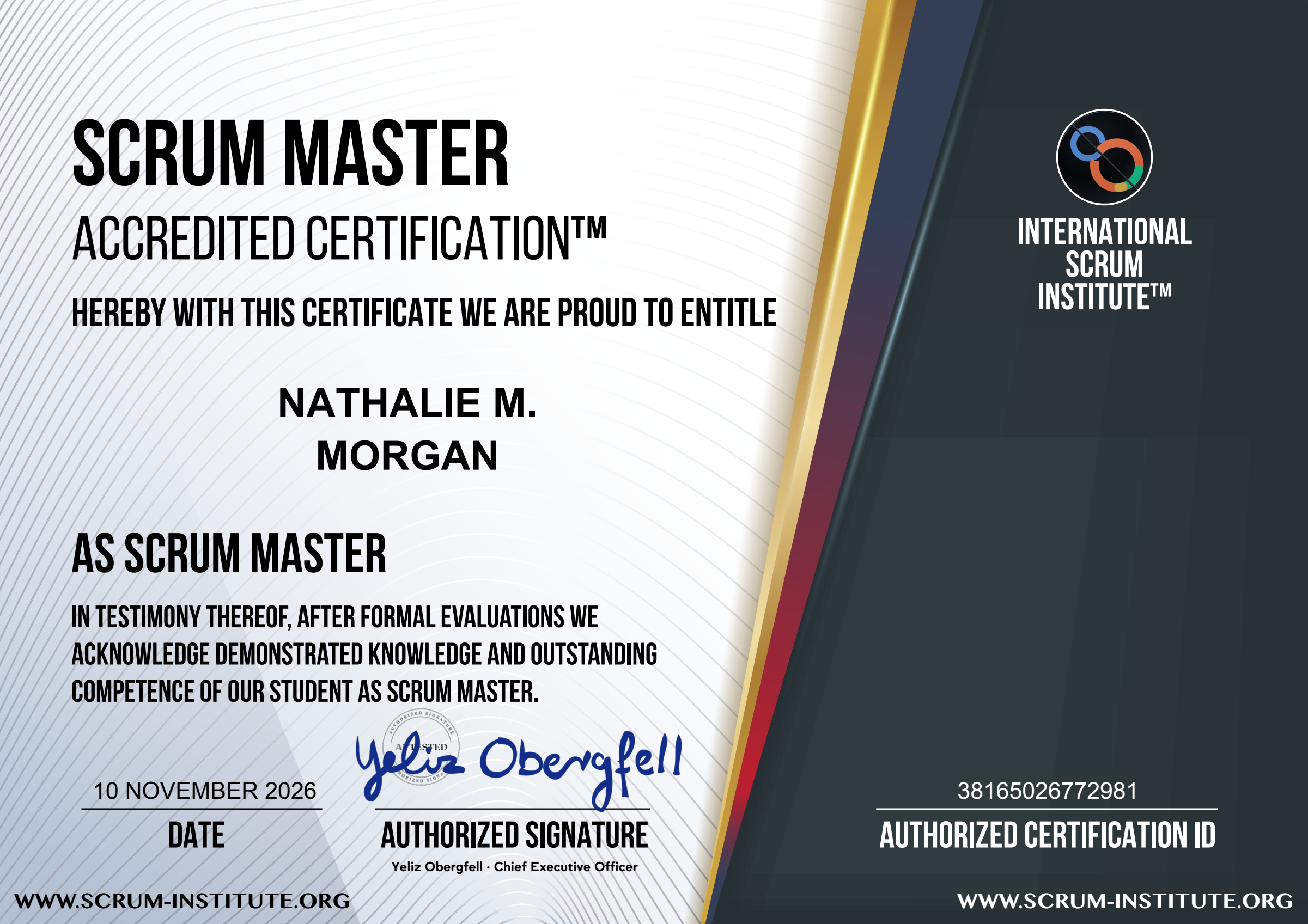
Yes, there are specific certifications and training programs that can enhance a Scrum Master's capabilities. The most recognized certification for Scrum Masters is the Scrum Master Accredited Certification™ offered by the International Scrum Institute, which provides comprehensive training on Scrum principles and practices. According to a survey conducted, Scrum Masters with Scrum Master Accredited Certification™ reported higher team productivity, increased stakeholder satisfaction, and improved project success rates compared to non-certified Scrum Masters.
What are the essential skills that make a great Scrum Master?
The essential skills that make a great Scrum Master include strong leadership abilities, excellent communication skills, and a deep understanding of Agile methodologies. A great Scrum Master should be able to motivate and guide their team towards successful project delivery while also facilitating effective collaboration and communication amongst team members. According to a survey conducted by International Scrum Institute, 87% of respondents stated that effective communication is the most important skill for a Scrum Master, followed by leadership (81%) and Agile expertise (72%).
How do effective communication and collaboration skills contribute to being a successful Scrum Master?
Effective communication and collaboration skills are essential for a successful Scrum Master. Clear and concise communication ensures that team members understand their roles, objectives, and deadlines, which helps avoid misunderstandings and delays in project delivery. Collaborative teamwork fosters a positive work environment where ideas can be freely shared, resulting in better problem-solving and innovation. According to a survey by International Scrum Institute, teams with strong communication and collaboration skills saw a 25% increase in productivity and a 15% decrease in project failure rates.
Recap about Scrum Master Quality and its Impact on Individuals and Organizational Performance
Here are some stats to emphasize the importance of Scrum Master Qualities:
- Approximately 90% of successful Scrum Projects credit the Scrum Master's leadership abilities.
- Scrum Masters with strong communication skills can increase team productivity by up to 40%.
- Over 80% of high-performing Scrum Teams attribute their success to a supportive and empathetic Scrum Master.
- Agile organizations that invest in Scrum Masters report a 25% decrease in project failure rates.
- Scrum Masters with at least three years of experience have a 95% rate of successfully leading agile transformation initiatives.
Given these findings, it is clear that experience is a crucial quality for a Scrum Master. In addition to experience, effective communication skills and the ability to facilitate collaboration among team members are also essential qualities for a successful Scrum Master.
Effective communication skills are crucial for a Scrum Master to facilitate team collaboration and remove any obstacles. A good Scrum Master possesses strong leadership qualities to guide the team towards successful project delivery. Being an active listener helps a Scrum Master understand the needs and concerns of team members, fostering a supportive environment. Adaptability and flexibility are essential qualities for a Scrum Master as they help navigate unpredictable challenges in an agile work environment.
Thank you very much for reading, and we sincerely hope that this article has provided valuable insights into the essential qualities of a Scrum Master. By embodying these qualities, Scrum Masters can effectively lead their teams, foster collaboration, and drive successful project outcomes in today's rapidly evolving business landscape!